
Pram shoes, or ‘pre-walker’ shoes, are perfect for protecting little feet against the elements whilst your child is still in the pushchair.
They are designed largely to look cute and stylish, but they’re also important for providing comfort, and getting your child used to wearing shoes, all whilst avoiding any growth and movement restrictions.
What actually are pram shoes?
Put simply, pram shoes are those which are designed primarily with aesthetic and comfort benefits in mind. This means that they’re not actually recommended for walking on and (as you’d expect) are mainly suitable for wearing in the pram.
They’re soft, lightweight footwear options, made from supple materials, best for younger children who are not yet walking.
What ages should pram shoes be worn?
Each child develops at different rates, meaning there aren't necessarily ‘rules’ for when children should start or stop wearing pram shoes.
We’d recommend that they can be used from around 3 months old, to keep the baby's feet warm and protected from the elements, up until the baby begins to crawl regularly and cruise around.
This typically happens at around 6-9 months of age, but there’s no need to be worried if your baby develops a bit slower in this sense. You can also keep pram shoes beyond these ages for trips out where they won’t leave the pram for long.
Are pram shoes good for babies' feet?

A common question surrounding pram shoes is whether or not they’re actually good for babies’ feet. We at Prenta Shoes spotted a trend with other pram shoes: they are useful for protecting little feet from the elements, but often, most brands make them flexible simply because they use soft materials and minimal structure, not what is needed to allow for movement, therefore restricting growth and development.
Our pram shoes are beneficial for babies feet for the following reasons:
-
Soft and flexible - Kids feet are soft and fragile, and shouldn’t be restricted or bent out of shape by stiff or rigid footwear, especially in the pram. That’s why these pram shoes are designed to be soft and flexible, and support early movements.
-
Breathable materials - As with all of our shoes, they’re made from breathable materials which allow for adequate airflow and prevent overheating.
-
Supporting early movements - Whilst not designed for walking (check out our first walker shoes) these shoes are suitable for supporting feet during every tiny shuffle and wobble on that journey to the first steps.
-
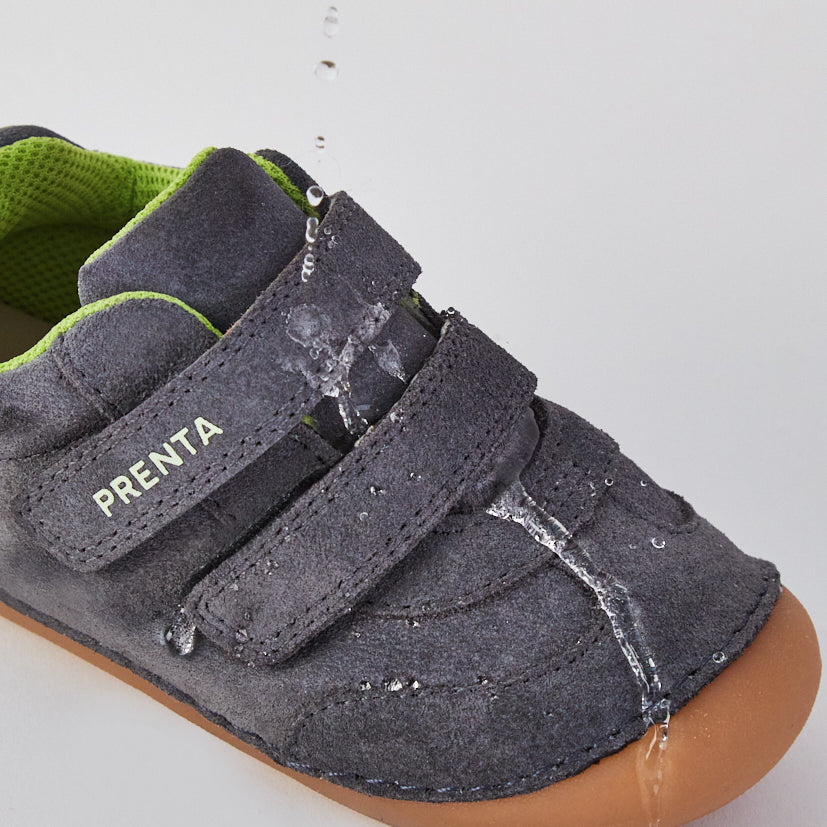
Protection from the elements - Warmth and protection from wind and rain are a main selling point of our pram shoe collections.
Should you put pram shoes on babies, or leave them barefoot?
Overall, a mixture between wearing pram shoes and leaving babies barefoot (or giving them barefoot shoes) is the best approach.
Barefoot allows your children to navigate and explore whilst naturally developing the muscles in their feet, and strengthening their movement patterns. As a result, we would suggest that every child should spend some time barefoot or in barefoot shoes, as opposed to always being in pram shoes.
However, at times, especially whilst in the buggy, it’s useful to put babies in pram shoes. Children are especially sensitive to cold, particularly during the colder months. That’s why we’d always recommend having pram shoes as an option, to provide that additional layer of comfort and protection, as well as helping your child become accustomed to wearing shoes.
The impact of introducing shoes too early on foot development

Introducing shoes too early on can be detrimental to foot development in a number of ways:
-
Interferes with muscle development - Firm shoes too early can ‘mould’ kids’ feet in an unnatural way, especially when introduced early. A better alternative is to allow barefoot time as much as possible, or introduce barefoot-style shoes. Equally, pram shoes are designed not to inhibit development of little feet.
-
Inhibits balance - Babies learning to walk need to feel the ground beneath their feet, learning to balance by beginning to make small adjustments with each step or movement. Shoes can restrict this feeling and lead to balance problems.
-
Restricts healthy growth - Rigid shoes from an early age can deform the soft cartilage and bones in a child’s foot. This can lead to problems with foot growth and development.
-
Traditional shoes can cause other foot issues - A whole host of problems can come alongside introducing traditional kids shoes at too early an age. These include ingrown toenails, corns, calluses, and even heel pain.
Pram shoes do not have these same negative effects however, because their purpose is to support them cruising tiny shuffles and wobbles on the way to the first steps, as well as providing warmth and comfort in the pushchair. When they are ready to walk, check out our first walkers!
Browse our collections of baby boys pram shoes and baby girl pram shoes, to ensure the long term foot health of your children.